Best Filament for Replacement Knobs on Vintage Radiator Valves
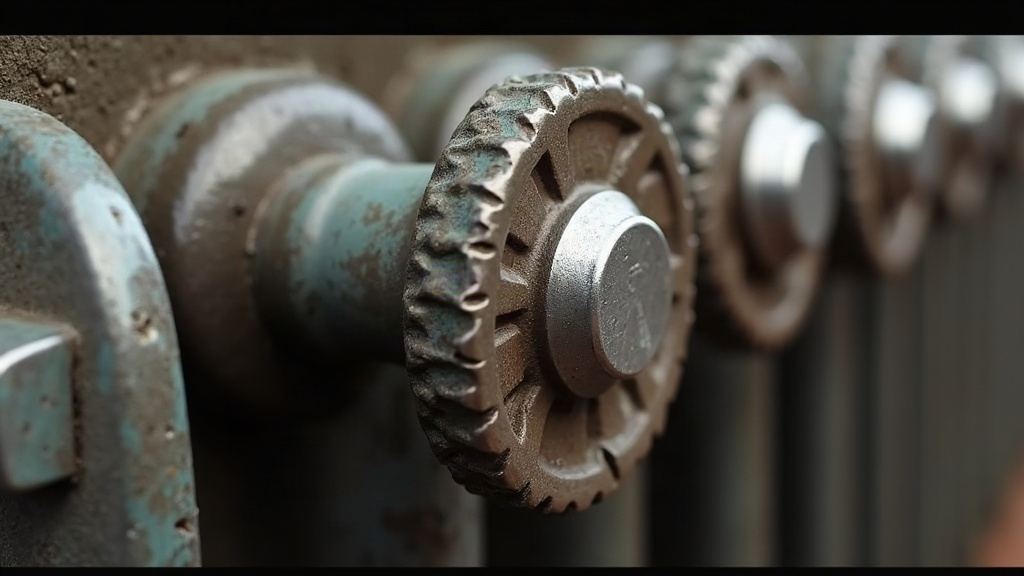
If you’re restoring an old cast-iron radiator and the original knob is cracked, missing, or fused solid under decades of paint, printing a replacement is usually the fastest and cheapest way out of the problem. Short answer: PETG is the best all-around filament for replacement radiator valve knobs. It strikes a better balance between heat resistance, impact strength, and layer adhesion than PLA or standard ABS manage on their own. If your knob sits right next to a hot pipe or a steam line, though, it’s worth stepping up to high-temperature filaments like PA-CF (carbon-fiber nylon) or PPSU, even with the extra cost and printing hassle that comes with them.
Why Filament Choice Matters for Radiator Knobs
Radiator valve knobs don’t behave like a typical 3D printed part sitting on a shelf. They take on three kinds of punishment at once:
- Residual heat from cast-iron pipes and valve bodies. Depending on whether you’re running hot water or steam, that can mean anywhere from 120°F to well over 200°F.
- Torque and grip force. Knobs get twisted hard, often on stiff valve stems that haven’t moved in years, maybe decades.
- Cosmetic expectations. Vintage radiators tend to get restored because people love how they look, so the knob has to hold paint, a metallic finish, or convincingly mimic an aged-brass texture.
A knob that looks perfect the day you print it but softens or cracks halfway through winter isn’t really a fix. It’s a stopgap that’s going to fail you again.
Filament Options Compared
PLA — Avoid for This Job
PLA is easy to print and captures fine detail nicely, which is exactly why people get tempted to use it for decorative knobs. The problem is heat: PLA starts softening around 140°F (60°C), and that’s comfortably inside the range of a hot steam valve. Run it through a full heating season and you’ll likely see warping, especially if the knob sits directly on a stem that heats up during operation.
Verdict: Fine for a quick test-fit or a display piece. Not something you want living near heat all winter.
PETG — The Practical Sweet Spot
PETG holds up better, with a heat deflection temperature around 160-175°F depending on the blend, strong layer adhesion, and solid impact resistance (useful, since these knobs get dropped, kicked, and wrenched on). It also takes spray paint and metallic finishes well once you’ve given it a light sanding or a primer coat.
- Prints fine on a standard FDM machine, no enclosure needed
- Holds up to torque better than PLA or basic ABS
- A bit of flex lets it survive over-tightening instead of snapping outright
Verdict: The best mix of cost, ease of printing, and actual durability for most hot-water radiator setups.
ABS — Good Heat Resistance, Trickier Print
ABS shrugs off heat better than PLA, and you can acetone-smooth it for a polished, almost cast-metal finish, a genuinely nice touch if you’re chasing that vintage look. The catch is warping mid-print, which basically forces you into an enclosed printer with a heated bed.
Verdict: A good call if you’ve already got ABS printing figured out and want that smooth old-brass sheen.
PA-CF / PPSU — For Steam Lines and High Heat
Got an actual steam system, not hot water? Temperatures near the valve can climb past 200°F, and that’s where nylon composites (PA-CF) or PPSU earn their keep, with much higher heat resistance and mechanical strength than anything above. The trade-off: you’ll need a high-temp nozzle, a heated chamber, and dry filament storage. This isn’t your average home setup.
Verdict: Overkill for most hot-water systems, but essential once you’re dealing with real steam heat.
Practical Tips for Printing Replacement Knobs
- Measure the valve stem shape before you design anything. Most vintage knobs sit on a square or hex broach, not a round shaft. Grab calipers, sketch it in CAD, and skip the guesswork.
- Use at least 4 perimeter walls and 40%+ infill so the stem socket can actually handle torque.
- Add a brass threaded insert if the knob takes a center screw. It stops the plastic from stripping out after repeated tightening.
- Test-fit before you finish it. Sand and paint only after you’ve confirmed the knob turns the valve smoothly without slipping.
Conclusion
For most vintage cast-iron radiator restorations running on standard hot-water systems, PETG gives you the best combination of heat tolerance, strength, and paintability for a replacement knob. Save ABS for jobs where that smooth, acetone-finished look matters more than keeping the print simple, and only reach for PA-CF or PPSU if you’re genuinely dealing with steam-heat temperatures. Match the filament to the system you actually have, not just the vintage charm of the radiator, and the printed knob you make will outlast the original one it replaced.