Resin vs FDM for Detailed Board Game Card Holders & Token Trays
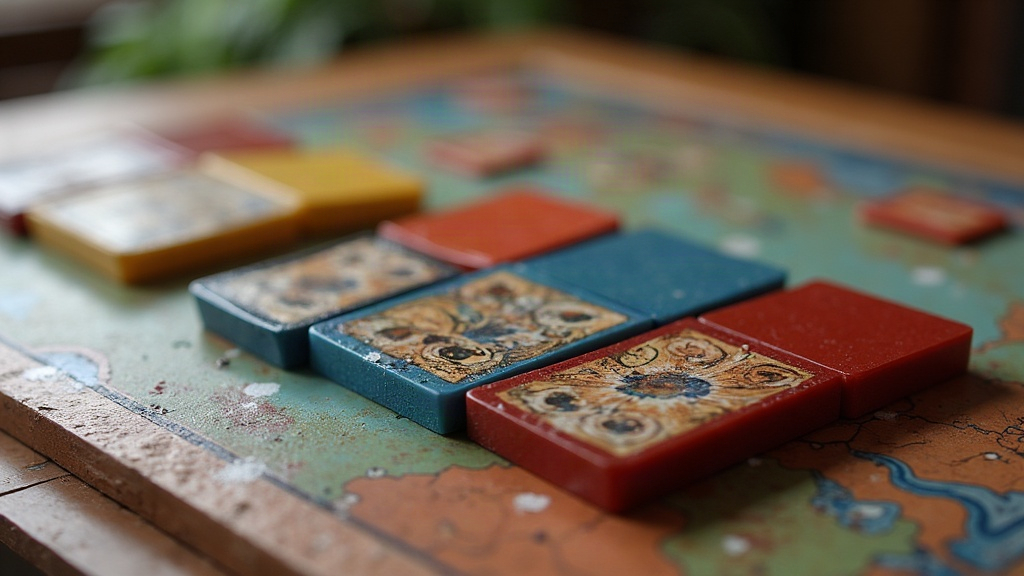
If you’re designing custom card holders and token trays for board games, the resin-versus-FDM decision really comes down to one trade-off: resin wins on fine detail and smooth surfaces, FDM wins on size, strength, and cost when you’re printing a lot of parts. Most people who actually build board game organizers use both. Resin for decorative card holders and small token trays, FDM for large base trays and insert frames.
Why This Decision Matters for Board Game Accessories
Card holders and token trays aren’t purely functional pieces. They’re often the first thing people notice at the table, the “wow factor” bits. That means print quality, dimensional accuracy (tokens actually need to click into their slots), and durability all matter at the same time. Pick the wrong process and you end up with warped trays, mushy engraved text, or holders that snap the second someone fans their cards a little too hard.
Resin Printing: Best for Detail and Texture
Resin (SLA/MSLA/DLP) cures liquid photopolymer layer by layer at a much finer resolution than FDM, typically 0.01 to 0.05mm per layer versus FDM’s usual 0.1 to 0.2mm.
Strengths:
- Crisp engraved text and icons. Great for labeled token slots (“Gold,” “Wood,” “Victory Points”) or faction crests stamped on the back of a card holder.
- Smooth curved surfaces. Ideal for ergonomic, fan-shaped card holders where you don’t want visible layer lines running across a curve.
- Fine lattice/dividers. Thin token dividers under 1mm print cleanly, where the same geometry on an FDM printer often just snaps mid-print.
Weaknesses:
- Brittleness. Standard resin cracks more easily under drop impact or repeated flexing, think of a card holder that gets bent every time someone fans their hand.
- Build volume limits. Most consumer resin printers top out around 18 to 22cm, so a full organizer tray for something like Gloomhaven or Scythe simply won’t fit in one piece.
- Post-processing required. Isopropyl alcohol wash plus UV cure adds 20 to 40 minutes per batch, and uncured resin is toxic to handle until it’s fully set.
- Cost per part. Resin runs $30 to $60 a liter, compared to PLA at $15 to $20 a kilo. Large trays get expensive fast.
Best resin use cases: decorative card holder frames, small faction token trays, miniature dice trays, nameplate inserts.
FDM Printing: Best for Strength and Scale
FDM (fused deposition modeling) melts filament and extrudes it layer by layer. It’s the default choice for most tabletop organizer projects, and for good reason.
Strengths:
- Large build plates. Many FDM printers handle beds of 25 to 35cm or more, enough to print a full game box insert in one or two pieces instead of a dozen.
- Material toughness. PETG and ABS shrug off daily shuffling, stacking, and transport without cracking.
- Low cost at scale. A dozen token trays in PLA costs a fraction of what the same batch would run in resin.
- No toxic post-processing. Pull the supports off and you’re basically done.
Weaknesses:
- Visible layer lines. Fine engraved text under 2mm tends to blur out or lose its edges entirely.
- Warping on large flat trays. ABS, and even PETG, can warp on trays wider than 20cm if you don’t have a heated enclosure.
- Thin walls are fragile. Divider walls under 1.2mm often fail outright, or need supports that leave ugly scars once removed.
Best FDM use cases: full insert base trays, large multi-compartment token organizers, structural card holder stands, box lid risers.
Practical Recommendation by Component
| Component | Recommended Method | Why |
|---|---|---|
| Decorative card holder (fan style) | Resin | Smooth curves, fine detail |
| Token sorting tray (small, labeled) | Resin | Crisp engraved labels |
| Full box insert / base tray | FDM | Build size + strength |
| Structural dividers (>1.5mm) | FDM | Cheaper, tough enough |
| Miniature holder inserts | Resin | Fine geometry |
Material Picks
- Resin: standard or “tough” resin for card holders; skip brittle “grey” resin for anything that gets handled often.
- FDM: PETG for durability and a bit of flex resistance, PLA for cheap prototypes, ABS only if your printer has a heated chamber.
Design Tips Regardless of Method
- Keep token pocket tolerances at +0.2 to 0.3mm over the actual token diameter. Too tight and tokens jam; too loose and they rattle around.
- Chamfer card slot edges so you’re not shaving corners off your cards every time you pull them out.
- Test-fit a single tray section before committing to a full print run. Reprinting a 6-hour FDM tray, or burning through a full resin vat cycle, gets expensive and annoying fast.
Conclusion
For board game card holders and token trays, resin gives you the fine detail and polish that makes an accessory look genuinely professional, but FDM is still the practical pick for anything large, structural, or produced in bulk. The smartest workflow for most hobbyists ends up being a hybrid one: print the detail-heavy, decorative pieces in resin, and let FDM handle the bulk of the organizer system.