Resin vs FDM Printing for Model-Railway Benches and Signposts
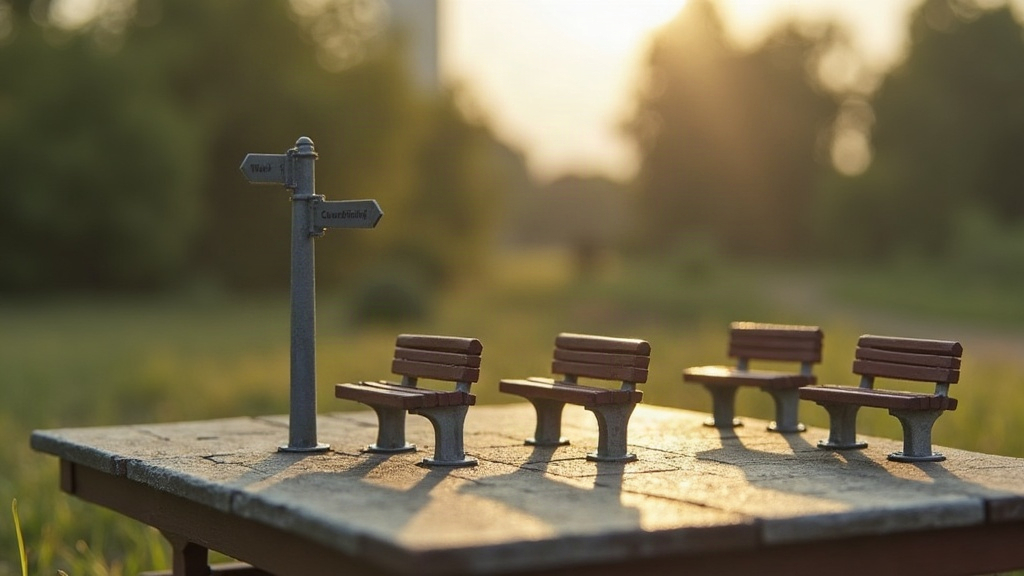
Resin vs. FDM for Platform Benches and Signposts
If you’re stuck deciding between resin and FDM for model-railway platform furniture, here’s the quick version: resin wins on fine detail and scale accuracy, FDM wins on speed, cost, and toughness when you need a pile of identical parts. Which one actually makes sense for you comes down to your scale (N, HO, O gauge) and how many copies of a given part your layout demands.
Why Benches and Signposts Are a Good Test Case
Platform benches and signposts are small, but they get noticed. Passengers sit right next to them, photographers frame shots around them, and any wobble, blob, or stray layer line jumps out against an otherwise carefully weathered scene. A single bad signpost can wreck an otherwise convincing platform photo. These parts tend to share a few tricky traits:
- Thin vertical elements (signpost poles, bench legs)
- Small flat surfaces (seat slats, sign boards)
- Repetitive geometry, since you often need 10, 20, even 50+ identical copies for a busy station platform
Put those three together and you get a genuinely useful stress test for comparing print technologies.
Resin Printing: Best for Fine Detail
Resin printers (MSLA/DLP) cure liquid photopolymer layer by layer with light, and the surfaces that come out are noticeably smoother than anything FDM produces.
Strengths:
- Layer lines are nearly invisible at N and HO scale, even under raking light
- Handles thin pole shapes under 0.5mm without snapping mid-print
- Sign lettering and timetable boards stay legible even at 1:160
- Great for one-off showpieces or hero details sitting near the front of a scene
Weaknesses:
- Resin parts are brittle. Drop an O-scale signpost on a hard floor and it’s more likely to shatter than bend
- Post-processing (IPA wash, UV cure) tacks on 15-30 minutes per batch
- Resin runs roughly 3-5x more expensive per milliliter than FDM filament per gram
- Ventilation and gloves aren’t optional; uncured resin irritates skin
Best use case: N and HO scale signposts, lamp posts, and detailed bench backs, anywhere every scale-inch of detail actually matters.
FDM Printing: Best for Batches and Durability
FDM printers extrude melted filament, usually PLA or PETG, through a nozzle, building parts one pass at a time.
Strengths:
- Much cheaper per part. A $20 kilogram of PLA can churn out hundreds of small benches
- Faster for bulk jobs when you arrange parts in a grid and print them all at once
- Tougher output. PETG benches shrug off handling, ballast spills, and the inevitable bumps of moving a layout
- No chemical cleanup, just snap off supports and give them a light sand
Weaknesses:
- Layer lines show at 0.1-0.2mm layer height, especially on curved armrests
- Sub-0.6mm signpost poles are a struggle; you need a nozzle below 0.4mm, which slows the print way down
- Small sign text often turns into a blur unless you run a 0.2mm nozzle at very slow speeds
Best use case: O and G scale benches, mass-producing dozens of matching signposts for a long platform, or any scenery that’s going to be handled a lot (club layouts, exhibition modules).
Practical Workflow: Combine Both
Honestly, most experienced modelers don’t pick a side. They split the job between the two:
- Design once in Fusion 360 or Blender, scaled correctly for your gauge (1:160 for N, 1:87 for HO, 1:48 for O).
- Print signposts and bench backs in resin for the pieces sitting at eye level or near a photo spot.
- Batch-print plain bench frames and generic poles in FDM for the background platforms where nobody’s zooming in.
- Paint everything the same way. A matte acrylic primer followed by dry-brushing blends the texture differences between resin and FDM parts, so once it’s all installed, nobody can tell which part came from which machine.
Cost and Time Comparison (Approximate, per 20 pieces)
| Factor | Resin | FDM |
|---|---|---|
| Print time | 2-3 hours | 1.5-2 hours |
| Material cost | $2-4 | $0.50-1 |
| Post-processing | 20-30 min (wash/cure) | 5-10 min (support removal) |
| Surface finish | Excellent | Good to fair |
| Breakage risk | Moderate-high | Low |
Tips for Better Results
- For resin signposts, tilt the pole at a slight angle (10-15°) instead of printing it dead straight up. It cuts down on suction marks and warping.
- For FDM benches, print with the seat flat against the bed, facing down. No supports needed on the slats that way.
- Always run a test batch of 2-3 pieces before committing to a full run of 50. Scale errors are sneaky and easy to miss until you set the part next to a figure or a doorway.
- Keep finished resin parts out of direct sunlight. Unpigmented or lightly pigmented resin can discolor over a few months.
Conclusion
For platform benches and signposts, resin gives you the crisp, scale-true detail that close-up scenes demand, while FDM brings the speed, durability, and low cost you need when producing scenery in bulk. Don’t treat it as either/or. Use resin for the showcase pieces and FDM for everything that needs to roll off the printer in volume. Your layout will look better for it, and your wallet won’t mind either.