Lightweight Clip-On Sunshades for E-Reader Screens at the Beach
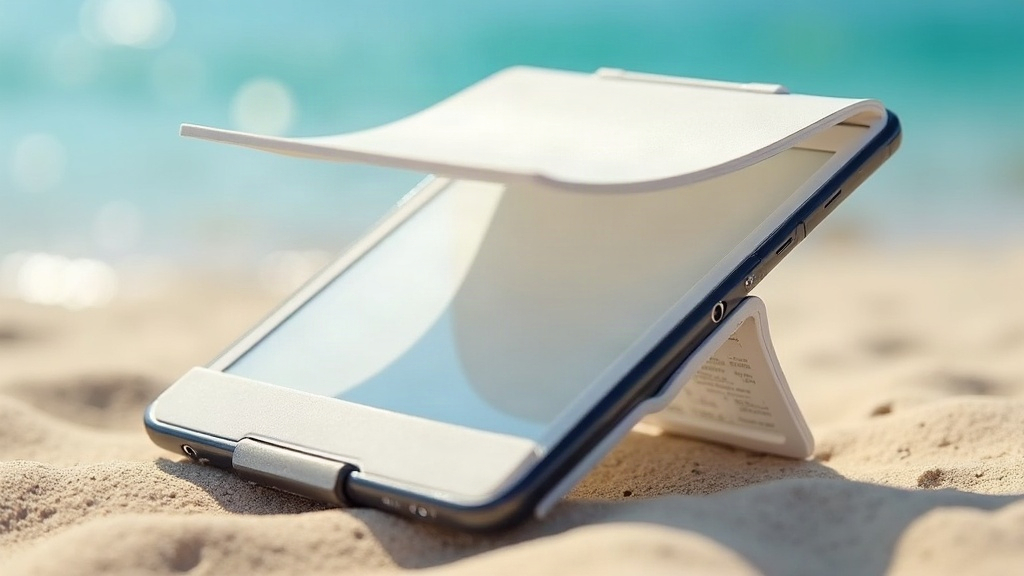
Why Your E-Reader Needs a Beach Sunshade (And How to Pick One That Actually Works)
Reading on an e-reader at the beach sounds idyllic until direct sunlight washes out the screen. You squint, you tilt the device at odd angles trying to find a reading sweet spot, and eventually your attention drains right along with the battery. A well-designed, lightweight clip-on sunshade solves this by blocking overhead and side glare, and it does it without adding bulk or weight to your beach bag. Here’s what actually makes these shades work, the trade-offs engineers wrestle with, and what to look for (or build yourself) if you want one that survives sand, wind, and salt air.
Why Standard Screen Brightness Isn’t Enough
Most e-readers use E Ink or reflective LCD displays precisely because they’re meant to rely on ambient light instead of fighting it. That’s the whole point. But here’s the irony: direct, high-angle sunlight at the beach creates harsh reflections and washout anyway, especially on glossy screen protectors or glass-covered models like certain Kindle Oasis or Kobo Sage units.
Cranking up the frontlight doesn’t help in bright sun. In fact it often makes contrast worse. A physical shade that blocks overhead and side light is the only fix that reliably works, which explains why clip-on sunshades have quietly become a growing niche in beach gear.
Core Design Requirements
A good clip-on sunshade for e-reader screens has to satisfy several competing constraints at once.
1. Weight and Packability
- Target weight: under 30 grams. Anything heavier throws off the reader’s balance in your hand, and you’ll feel it after twenty minutes.
- Foldable or collapsible hood design so it lies flat in a beach bag or book sleeve.
- Materials like 0.5mm polypropylene sheet or ripstop nylon over a thin wire frame keep bulk to a minimum.
2. Secure, Non-Marring Clip Mechanism
- Spring-loaded silicone-lined clips are a must; bare metal scratches e-reader bezels fast.
- Clip tension has to hold up in wind (beach breezes are a genuine stress test) without crushing thin device edges.
- A universal clip width, adjustable from 3 to 9mm, covers most 6” to 8” e-readers without needing device-specific molds.
3. Glare-Blocking Geometry
- A shallow hood angled around 35 to 45 degrees blocks high-angle sun while still letting you see the screen at a normal reading distance.
- Matte black or dark gray interior lining stops secondary light bounce-back onto the display. Skip this and you’ve basically built a tiny reflector box.
- Side flaps, even tiny 2cm wings, make a noticeable difference against low-angle afternoon sun bouncing off sand or water.
4. Beach-Specific Durability
- UV-stabilized plastics resist yellowing and brittleness after weeks of sun exposure.
- Rounded edges and sand-resistant hinges keep grit from jamming the fold points. Sand finds its way into everything at the beach, including your gear’s moving parts.
- Quick-dry materials matter if the shade gets splashed. Skip foam or fabric cores; solid polymer or coated mesh dries faster and won’t mildew in your bag.
Common Mistakes in DIY and Budget Designs
- Too rigid a hood: Shades that don’t flex slightly in wind tend to snap off during a gust. I’ve seen cheap units crack after one windy afternoon.
- Opaque interior without matte coating: Glossy black plastic still throws light back onto the screen at certain angles. Matte isn’t cosmetic here, it’s functional.
- Clips sized for phones, repurposed for e-readers: E-reader bezels run thinner and more uniform than phone edges, so phone pop-socket-style clips slip constantly.
- Ignoring page-turn buttons: A shade that covers the physical buttons on something like a Kindle Oasis defeats its own purpose. You end up removing it just to turn the page.
What to Look for When Buying One
If you’re shopping rather than building your own, prioritize these:
- Adjustable hood angle - the sun’s position shifts all day, so a fixed angle only works for an hour or two.
- Weight under 1 ounce (28g) - check the actual listed spec, not just “lightweight” in the marketing copy.
- Clip material - silicone or rubberized grips, not bare metal or hard plastic.
- Compatibility list - confirm it matches your specific model’s bezel thickness and screen size before you buy.
- Storage pouch included - sand gets into every crevice at the beach, so a simple drawstring bag protects the clip mechanism between uses.
A Simple Test Before You Commit
Try this before spending money: hold your e-reader at your normal reading angle in direct sunlight, then prop a piece of cardboard or a book cover above the screen at roughly a 40-degree angle, like a makeshift hood. If the glare disappears, a clip-on sunshade with similar geometry will work for you. If it doesn’t, the problem might be the screen coating’s reflectivity rather than ambient glare, and a shade alone won’t fix that. In that case, pair it with a matte anti-glare screen protector.
Conclusion
A lightweight clip-on sunshade is a small accessory that solves one very specific, very common beach-reading headache: screen washout from direct sun. The best designs balance minimal weight, a non-marring adjustable clip, and a shallow matte-lined hood angled just right to block high sun without blocking your view. Whether you’re buying one off the shelf or prototyping your own in the garage, get those three things right first. Everything else is just refinement.