PETG vs ASA for Replacement Clips on Outdoor Retractable Clotheslines
PETG vs ASA for Replacement Clips on Outdoor Retractable Clotheslines
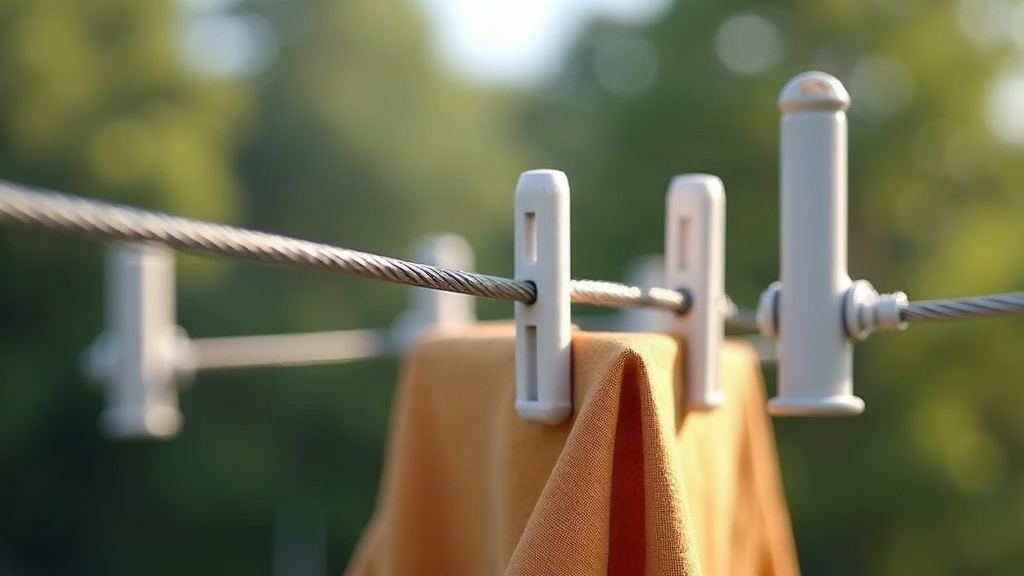
Snapped a clip or hook on your retractable clothesline? You don’t have to replace the whole unit. A 3D printed part will do the job just fine. But here’s the catch: material choice matters way more than it would for something sitting on a shelf indoors. Clothesline clips live outside, all year, taking direct sun and getting soaked by rain on a regular basis. Between the two materials people actually reach for, ASA wins as the long-term outdoor option, while PETG works as a solid short-term or budget fix, one that will eventually get brittle faster once UV starts chewing through it.
Let’s break down why, and what actually fits your situation.
Why This Choice Matters
Clothesline clips are small parts doing real work under constant abuse:
- Direct sunlight for hours, every single day
- Rain, humidity swings, temperature swings
- Constant mechanical stress from clipping, unclipping, retracting
A part that looks perfectly fine sitting on your print bed can turn brittle and crack apart within a single season if it wasn’t built to handle outdoor life.
PETG: Strong, Easy to Print, But UV-Sensitive
PETG (Polyethylene Terephthalate Glycol) is the go-to for a lot of beginners, mostly because it’s forgiving on the printer.
Pros:
- Prints easily, barely any warping, no enclosure required
- Tough and impact-resistant at room temperature
- Layers bond well, so clips don’t tend to snap right along the seams
- Cheap and easy to find
Cons:
- UV light slowly breaks it down, causing yellowing and a chalky surface
- Gets noticeably more brittle after 6-12 months of full sun in hot climates
- That same flexibility that makes it tough can also let clips deform under years of steady tension
Best for: Renters, quick fixes, cloudier or cooler climates, or anyone who’s fine reprinting a clip every year or so instead of buying premium filament.
ASA: Built for the Outdoors
ASA (Acrylonitrile Styrene Acrylate) was basically designed as ABS’s outdoor-ready cousin, with much better UV and weather resistance baked in.
Pros:
- Outstanding UV stability, color and strength hold up for years in direct sun
- Handles rain, humidity, and temperature cycling without much fuss
- Stays rigid and strong even after long-term sun exposure
- Has that matte, slightly textured finish that matches factory-molded clothesline hardware almost exactly
Cons:
- Needs higher printing temps and ideally an enclosure, otherwise warping becomes a problem
- Puts off stronger fumes while printing (styrene), so run it somewhere ventilated
- Costs a bit more per spool than PETG
Best for: Anyone who wants a clip they print once and never think about again, especially if you’re somewhere brutal for UV like Australia, the southern US, or anywhere around the Mediterranean.
Side-by-Side Comparison
| Factor | PETG | ASA |
|---|---|---|
| UV resistance | Moderate, degrades over 6-18 months | Excellent, holds up for years |
| Print difficulty | Easy | Moderate (needs enclosure) |
| Impact strength | High initially | High, stays consistent over time |
| Cost | Lower | Slightly higher |
| Fumes | Minimal | Noticeable (ventilate area) |
| Best climate | Mild, shaded | Hot, sunny, high-UV |
Practical Printing Tips for Clothesline Clips
- Print orientation: Line up the clip so the clamping arm’s stress runs along the layer lines lengthwise, not across them. This cuts down on snapping right at the hinge point.
- Infill: Go with 40-60% infill minimum, gyroid or cubic pattern, since these parts flex repeatedly.
- Wall count: 4 or more perimeter walls where the clip grabs fabric or wire adds real durability.
- Color choice: Lighter colors like white or tan handle heat buildup and UV yellowing better than dark shades, true for both materials.
- Post-processing: No ASA on hand? A light coat of UV-resistant clear spray can stretch PETG’s outdoor lifespan noticeably.
Which Should You Choose?
Live somewhere mild, don’t mind printing a fresh clip once in a while? PETG is a totally reasonable, low-hassle choice. But if your clothesline bakes in full sun most of the year, or you just want something you install and forget about, ASA is the smarter call. It’s also just closer, materially, to whatever your original hardware was molded from in the first place.
Bottom line: Need a quick patch? Print PETG. Want a replacement clip that shrugs off years of sun and rain? Print ASA.